b/w_borderline
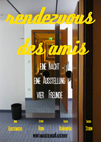
5. - 25. september 2011
ein Ausstellungsprojekt von montanaberlin für galleria espoonsilta, Espoo/Helsinki / Finnland //
an exhibition project by montanaberlin for galleria espoonsilta, Espoo/Helsinki, Finland
Jörn Gerstenberg
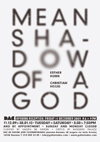
Esther Horn
Christian Heilig
Matthias Beckmann
Massimo Palazzi
Alekos Hofstetter/Holger Lippmann
das Projekt ist Teil des Förderprogramms der Kulturverwaltung/Senat Berlin //
the exhibition is funded by the city of Berlin/Senat Berlin
Ausstellungsbesprechung in der "Helsingin Sanomat", Finnlands größter Tageszeitung, vom 13.9.2011 //article about the show from the "helsingin sanomat", finland´s largest daily news-paper:
Artikel / review //
Übersetzung / german translation
Linocut: Jörn Gerstenberg // Zeichnung: Matthias Beckmann // Wandmalerei: Esther Horn
Skulptur: Christian Heilig // Linocut: Jörn Gerstenberg // Wandmalerei: Esther Horn // Zeichnung: Mat-thias Beckmann // Videoanimation: Alekos Hofstetter/Holger Lippmann
s/w_borderline, das Ausstellungskonzept von montanaberlin für Espoo, vereint künstlerische Posi-
tionen, die sich thematisch oder formal mit dem Schwarz-Weiß beschäftigen. Schwarz-Weiß steht
für ein Minimum an Mitteln als Maximum an Ausdruck. Es verbindet zwei unvereinbare Extreme deren
Kombination Grenzbereiche bis ins trügerisch Farbige zulässt. Das Weiß des Lichts steht gegen das
Schwarz unendlichen Raums, eine maximale Anspannung entgegengesetzter Kräfte trägt ihren end-
losen Kampf aus. Schwarz-Weiß Bilder des Film Noir und expressionistischer Filme lassen im Be-
trachter Farbassoziationen entstehen. Die Grenze zwischen Schwarz und Weiß ist der Schritt von
Nein zu Ja, von Null und Eins in der Computerkodierung. Gutenbergs Buchdruck trifft auf Konrad Zuses
Computervision. Der Umgang mit Linie und Fläche ist so vielfältig wie der Umgang mit schriftlicher
Sprache: sie erschaffen eine Welt mit minimalen Mitteln. Das weiße Blatt wird zum Fenster in eine an-
dere Welt.S/W ist die Sprache einfacher Medien und begrenzter Zeit. Billige Drucksachen, rasch
entworfene Flugblätter, „arme“ Plakate, Flyer und Fanzines verlassen unzählige Copyshops und bring-
en eine eigene Ästhetik hervor. Ein Werbeslogan der neunziger Jahre preist einen Whiskey an: The
day is grey. The night is black and white.“ Dem S/W haftet auch etwas primitiv-geheimnisvolles an. Es
ist das Schachbrettmuster des Geistesfür die Spielzüge des Lebens. Das komplette Spektrum ist ver-
treten: von poetisch bis brutal, von roher Klarheit bis ins flirrige Changieren des Moirè-Musters
english version:
b/w_borderline, the exhibition concept by montanaberlin for Espoo units contemporary positions,
who are dealing with „black-and-white“, in form and content. Black-and-white stands for a minimum of
medium as a maximum of expression. It combines two incompatibly extremes, its combination en-
countenances deceiving coloured border zones.The white of light is accompanied by the black of end-
less space, a maximal exertion of antipodal power fights its endles battle. Black-and-white pictures of
„Film-Noir“ and expressionist films evoce coloured Assoziations in the recipient. The border between
black and white is the step fom no to yes, from zero to one. Letterpress printing by Gutenberg meets
computervision by Konrad Zuse. To deal with stripe and space is as multifarious as dealing with writ-
ten language: both creates a whole world with irreducible averages, the white sheet becomes a window
into another world. Black-and-white is also the language of simple medias and absent time. A count-
less number of copyshops eject cheaply produced printing matters, fastly designed flyers, "paltry“ po-
sters and leaflets, generating a distinctive aesthetics. An advertising slogan of the 90 ies promotes a
whisky: "The day is grey. The night is black and white.“ There is something mysterious and primitive in black-and-white at the same time. It is the mental checkerboard pattern for moves in life. There is the
entire spectrum present: from poetical to violent, from crude clarity to the clearing away pattern of
moiré.

Christian Heilig, o.T., Holz, Wachs, Haare, Knetmasse, Papier, MDF, Acrylglas
Esther Horn, nachts (fading) 3, 30 x 40cm Öl/N, 2006
Jörn Gerstenberg, leeres Paradies 5, 70 x 100 cm, linocut, 2011
Fotoprint: Massimo Palazzi // Linocut: Jörn Gerstenberg // Wandmalerei: Esther Horn
Massimo Palazzi, Reflecting panel #1, fotoprint, 2010
Jörn Gerstenberg, leeres Paradies 5, 70 x 100 cm, linocut, 2011
Alekos Hofstetter/Holger Lippmann, Videoanimation, 163 King Street West (URBAN DECONSTRUCT-IONS), 2006
Matthias Beckmann, Flughafen Tegel / EMMA Espoo Museum of Modern Art, aus der Serie "Finnlandreise", je 29 x 20 cm, 2011 // entstanden während Reise u. Ausstellungsaufbau